Live forever
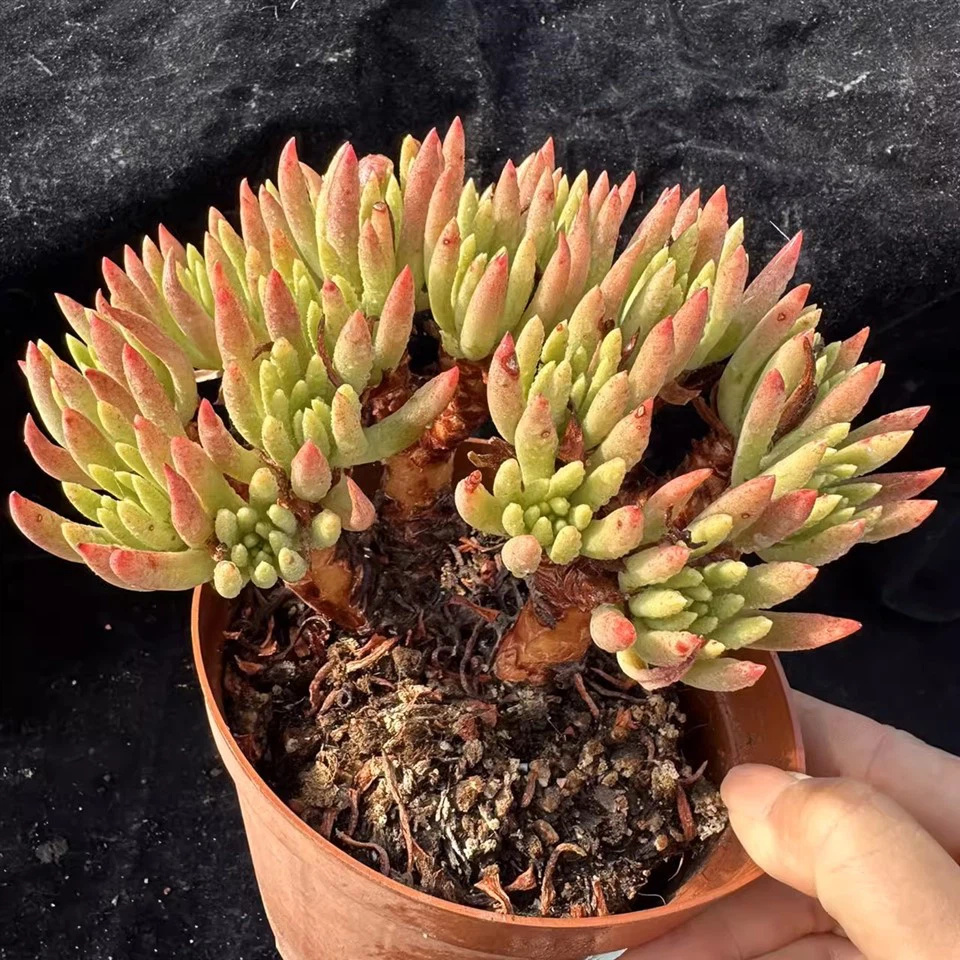
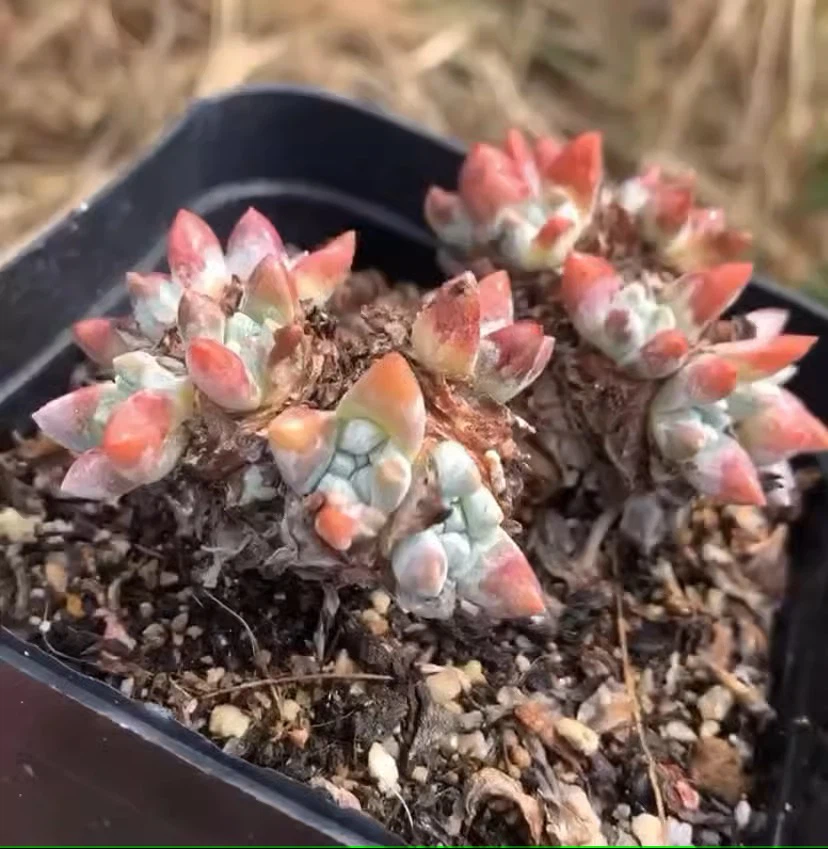
Live forever is a small perennial succulent with white, tubular flowers available in baja california. The plant grows in a solitary state or clumps forming tiny adorable rosettes in temperatures ranging from 20°f to 25 °f i.e., minimum cold hardiness zones.
Tapertip liveforever
Similar to the above, this dudleya species also belongs to baja california and some other portions of california. Tapertip liveforever is an exciting succulent with spiny, rosette-pattern leaves in a narrow pencil shape and mostly covered with epicuticular wax.
Additionally, the leaves turn into pretty rosy-red shades with blue-green leaves under sunlight.
Short-leaved dudleya
Dudleya brevifolia is an endemic perennial herb native to california. With small, cone-shaped leaves, they have a variety of colors in purple, brown, red, and green shades.
Moreover, some species are even deciduous, giving up their leaves in the summer heat and surviving as an underground corm, or storage organ.
Giant chalk dudleya
The giant chalk dudleya is a magnificent, evergreen ornamental succulent with beautiful solitary rosettes around 12-18 inches wide. The leaves are spoon-shaped and covered with a heavy coat of chalky white powder which makes it look like silver-gray.
Coast dudleya
Coast dudleya, is known by several other names like sea lettuce and sand lettuce. It is an endemic species in california. The leaves of this plant form rosettes up to 20 cm wide, with fleshy, pale green, and cone-shapes to oblong shapes.
Candleholder dudleya
Dudleya candelabrum is an endemic succulent native to santa cruz and santa rosa islands. This succulent is a threatened species according to reports and sources. It is a small succulent with light green leaves in the shape of a spade, they can also grow up in a neat rosette shape.
Canyon dudleya
A very impressive colorful succulent, the canyon dudleya with tall orange flower spikes, can hold large clusters of red blooms in the shape of a trumpet. In addition, the leaves are flattened, grayish, and thick often with bright red coloring along the edges and tips in the dry conditions.
Ladies’-fingers
Ladies’-fingers is a low-growing perennial with one or several short branching stems that arise from a woody base. These branches produce many pointy rosettes with fleshy leaves that form a compact mound. This finger-like succulent is a coastal species native to southern california and northern baja california.
Bluff lettuce
Bluff lettuce is a beautiful color-changing perennial succulent. These types of dudleyas turn into red shades when you provide them with direct sunlight for 4-5 hours every day. It also grows beautiful yellow flowers!
Munchkin liveforever
Munchkin liveforever is another small and rare type of dudleya succulent. Moreover, they like to grow on rocky places and cliffs of baja california. Surprisingly, it has adapted to live through harsh conditions. You can add this one to your indoor succulent collection because of its compact growing habits.
Greene’s liveforever
With impressive tall flower stalks, greene’s liveforever has similar growing habits to that of the munchkin liveforever dudleyas. They have leaves that grow up in compact, upright rosettes with a pointed tip. Additionally, these succulents are endemic to the channel islands of california.
Rock dudleya
Native to baja sur of mexico in a range along the coast of san quintin to el rosario. It grows with red spots on green leaves and loose rosettes, the leaves of baja live forever are comparatively large. The plant also resembles the leaves of agave but is only smaller.
Lanceleaf liveforever
The lanceleaf liveforever is also a perennial succulent with a heavy waxy coat on its leaves. Grows on dry slopes and banks below around 3500 ft., and native to coastal sage scrub, chaparral, and santa barbara. It is very variable in the shape of the leaves—from thick to flat, to elongated.
Bright green dudleya
Bright green dudleya is from santa catalina island. Usually, it loves to grow on cliffs and rocks and at elevations up to 1,300 feet from sea level. The beauty of this succulent lies in the long finger-like or bean-like upright leaves that also look like an inverted octopus sometimes!
Santa barbara island dudleya
The santa barbara island live forever was once assumed to be exterminated by feral rabbits. However, after removing the rabbits from the areas the plants survived and recovered on the slopes and reefs. So, now they are at present a rare species of succulent and need protection. Additionally, it grows tiny bright yellow blooms on long stalks.
Bright green dudleya
The bright green dudleya is native to several coastal regions of california. They have a very different structure from the common ones. The leaves are strap-shaped, flat with meaty leaves, forming neat green to grayish rosettes with white flowers. Moreover, the rosy blooms have a smooth fragrance.
Low canyon dudleya
Beautiful echeveria-like-looking succulents, these dudleyas love to grow on rocky slopes natively in california and the south coast ranges. They look very pretty because of their diamond-shaped leaves arranged in rosettes and when the yellowish-white tiny flowers bloom you can’t take your eyes away! It will happen from may to june.
Sticky dudleya
The sticky dudleya has unique sticky, fragrant leaves and is one among the two similar species in the dudleya genus. Besides, it is a stunning succulent with compact light green leaves and reddish-yellow flowers that grow on long stalks of almost 10-14 inches in length!
Palmer’s dudleya
Palmer’s dudley is also one that is similar to the echeveria in terms of looks. They are green in color with a bluish tint at the center. Additionally, the flowers are somewhat similar in appearance to that of the “low canyon dudleya” But only reddish-white. The beautiful basal rosette can grow up to 15-20 centimeters wide.
Santa clara valley dudleya
Santa clara valley dudleya is a subspecies of the dudleya abramsii. It is usually found on rocky outcrops within serpentine grasslands in south san jose. The most unique nature of this succulent is that they can grow up to 3-4 feet high flower stalks. Apart from this, they are simple green-purple succulents and bloom yellow flowers.
Abrams’ liveforever
Abrams’ liveforever is the second succulent among the two that have waxy, thick leaves oblong to a triangular shape. Interestingly, the leaves have a beautiful red border along the edges. Additionally, these succulents are endemic to california as they grow as solitary rosettes in caespitose forms.
Orcutt’s liveforever
Abundantly grows in southward mexico but is very rare in southwestern san diego county on the coast and is considered a threatened species in california. Plus, with tidy rosettes, these dudleya subspecies can grow up to 3-4 inches in both height and width, producing tiny pink and white blooms.
San gabriel mountains dudleya
Very similar to that of blue chalksticks in terms of appearance. The san gabriel mountains dudleya prefers to grow in the crevices and cracks of the granite slopes natively.