Your Leading Zhongshili International Trade Co., Ltd. Supplier


We are the only company in Liaoning Province that has the import and export qualification for endangered plants granted by the Chinese government.

We focus on the introduction, propagation and cultivation of high-quality living plants and endangered plants. We currently have Multiple planting bases, Guangdong, Fujian, Yunnan, Dalian and Shandong. We strive for the most environmental.


Why Choose Us?

24H online service

Here you can ask any question about indoor plants Aeonium and our experts will give you a satisfactory answer, feel free to write us an email with your valuable comments.

One-stop solution

We can handle customs clearance procedures, endangered plant certificates, phytosanitary certificates, and certificates of origin on behalf of you.

Abundant varieties are available

We insist on continuous innovation and introduction of new varieties, which can meet different market demands. The prices are reasonable. Welcome to purchase.

High quality

We ship directly from the nursery to your doorstep to uphold the quality you deserve. Let our professional growers build the roots & put in the work that sets your garden up for success!

  • Crassula Perforata

    Crassula perforata,commonly known as String of Buttons or Money String,is a popular succulent plant belonging to the Crassulaceae family.

  • Graptoveria ‘Queen’ F. Cristata

    Graptoveria ‘Queen’ f. cristata (common name: Queen Crested) is a beautiful crested succulent cultivar with high ornamental and collection value.

  • XGraptophytum ‘Supreme’ Variegata

    x Graptophytum 'Supreme' Variegata (common name: Winter Beauty Variegated, Dong Meiren Variegata) is a highly popular variegated succulent with strong commercial value in the ornamental succulent

  • Echeveria 'DAPHNE'

    The leaves are small, cute and round, in an oval shape. The front side is slightly flat while the back side has a rounded arc-shaped bulge. The tip is blunt and rounded without an obvious pointed end.

  • Portulacaria Afra #rareplants #succulentfarm

    Portulacaria afra is a succulent plant of the genus Portulacaria in the Portulacaceae family. It likes dry and sunny environments, is tolerant of drought and semi-shade, but not tolerant of

  • Echeveria 'Pure Love'

    The leaves are slightly thick with sharp tips. They are closely arranged and stacked one after another. The color of the leaves ranges from light green to orange-yellow, and the surface is covered

  • Echeveria Chunchun Jenny #rareplants#succulentfarm

    The succulent Echeveria 'Qingchun Zhenni' is a light-loving plant. During the growth seasons of spring and autumn, sufficient sunlight can make its leaves more compact and its colors more vivid.

  • Echeveria Chunchun Jenny #succulentlife #plantsforsale

    The leaves are oval-shaped, relatively thick and fleshy, with short leaf tips. They are bluish-green or yellowish-green in color and covered with a thin layer of white frost, giving a fresh and

  • Echeveria Morning Dew

    The leaves are thick and fleshy with short leaf tips. The whole plant is covered with a thin layer of white frost.

  • Echeveria Dust Rose

    The leaf tip is short and not very noticeable. The color of the leaves is greenish-purple (purple tinged with green), and the whole plant is covered with a thin layer of white frost.

  • Echeveria'CHARLES'

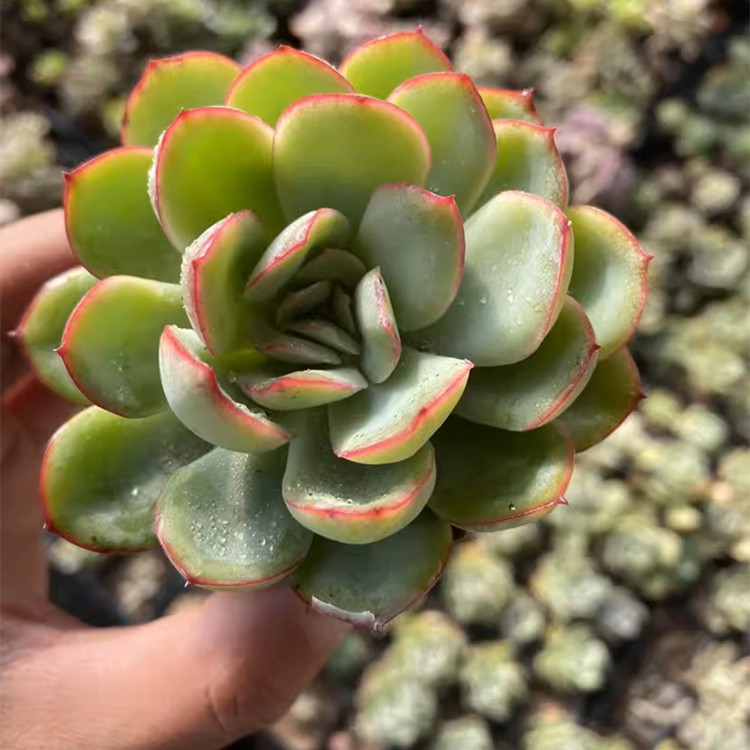
    The leaves are oval-shaped, relatively thin, and their color is green or yellowish-green. The edges of the leaves have red or pink margins, and the leaf tips are rather pointed.

  • Echeveria'silhouette'

    Echeveria 'Silhouette' is a kind of succulent plant belonging to the genus Echeveria in the Crassulaceae family.

First 1234567 Last
What is Echeveria?


The genus Echeveria consists of about one hundred fifty species native to areas of Mexico, Central America, and South America. The genus belongs to the plant family Crassulaceae, which also includes the popular succulent genera Crassula, Sedum, Sempervivum, and Kalanchoe. Echeveria – the genus name is used as the common name too – thrive in high elevation habitats where the climate is dry, the soil is rocky, and the days are sunny but not terribly hot.


Benefits of Echeveria


Easy care with low maintenance: Echeveria is a versatile plant because it can thrive in almost each kind of environment, whether indoors or outdoors. These cute plants are hardy survivors and are native to desert environments, and they happily take up the problems of plant care that occur as a result of neglect. So, if you love gardening but frequently forget to water your plants, you might find that Echeveria is the plant for you to grow. If you hydrate your Echeveria plants infrequently but thoroughly, the plants will be able to store water in their thick, spongy leaves and stem of the plant to be well-supplied with water until the next time you water them.


Remain hydrated even in desert gardens: If you belong to an area that has difficulty retaining water, you must go for Echeveria plants to offer colour and diversity to enhance the beauty of the garden. If you live in an extremely hot and dry environment, you can consider Echeveria because they perform really well as a bedding plant or ground cover thanks to its low water requirements. These plants are a fantastic complement to xeriscaping projects, which make use of plants that can survive in dry conditions in order to conserve water.


Xeriscaping projects: A xeriscape is an ideal low-maintenance garden that relies on long-term watering and can typically thrive with only the moisture provided by natural rainfall. Because it requires very little (if any) fertilizer and very little trimming and upkeep, Echeveria thrives in a xeriscape that has been properly created.


Clean and improve air quality: As we all know plants make oxygen with a process called photosynthesis. All kinds of plants produce oxygen that is very helpful in the process of air purification. This process removes carbon dioxide and harmful gases from the air while also making oxygen. Let’s have a look at this NASA Clean Air Study that was carried out towards the end of the 20th century. According to the findings of this study, plant species that have a wide soil surface area such as Echeveria and other spiky succulents are more effective at cleaning the air than plants with a lot of leaves.


Good for health and well-being: Gel that comes from echeveria plant is best for offering medicinal and physiological benefits in the herbal medicine field. You can treat warts and wounds with gel because it helps dissolve and soften the growth. Cut a leaf in half and place the cut side over the wart or corn for the night. Soak the wart or corn in hot water for several minutes before removing it. It is possible that the gel, on its own, could help with the discomfort and itching caused by bug bites and stings, as well as coming into contact with other insects, etc. People also witness to cure a sore throat by gargling with a mixture of gel and water. In order to treat mild rashes and other inflammations, you can use this gel with lard and use it externally.


Types of Echeveria
Hera Clustering
Echeveria Montage
Echeveria Paramera
Echeveria Pure Love

Echeveria 'afterglow'
Echeveria 'Afterglow' features large rosettes with powdery pink to lavender leaves. The edges of the leaves are bright pink, creating a striking contrast. This variety can reach up to 16 inches in diameter and produces orange flowers on tall stalks. It thrives in full sun to partial shade and well-draining soil, making it a stunning centerpiece in any succulent garden.


Echeveria agavoides 'lipstick'
Known for its bright green leaves with red edges, echeveria agavoides 'lipstick' forms tight rosettes up to 12 inches wide. The pointed leaves resemble those of an agave plant, hence the name. It prefers bright, indirect light and well-draining soil and produces red and yellow flowers in the summer. This striking variety adds a splash of color to any collection.


Echeveria 'black prince'
This variety has dark purple, almost black leaves that form rosettes about 3 inches wide. 'black prince' thrives in bright, indirect light and can tolerate full sun with proper acclimation. The leaves turn darker with more sun exposure, creating a dramatic look. It also produces red flowers, providing a beautiful contrast against the dark foliage.


Echeveria 'blue curls'
Blue curls' is a hybrid with crinkled, wavy leaves that range from blue-green to pink. The rosettes can grow up to 12 inches tall and wide. This variety is known for its curly leaf edges and the vibrant pink tips that develop in bright light. It produces hot pink to orange flowers, adding to its visual appeal.


Echeveria 'doris taylor'
Commonly known as the woolly echeveria, 'doris taylor' features fuzzy green leaves with white hairs. The small, compact rosettes are about 4 inches wide. This variety grows well in bright, indirect light and needs well-draining soil. It produces yellow flowers in the spring and summer, making it a charming addition to any succulent collection.


Echeveria elegans
Also called Mexican Snowball, Echeveria elegans forms tight, compact rosettes of pale blue-green leaves. The rosettes can reach up to 8 inches in diameter and produce pinkish-red flowers on tall stems. This variety is perfect for ground cover and thrives in full sun to partial shade. Its neat growth habit and ability to form dense clusters make it ideal for garden borders and rock gardens.


Echeveria 'imbricata'
Known for its compact growth and blue-green leaves, echeveria 'imbricata' produces offsets prolifically, making it ideal for propagation. The rosettes can grow up to 8 inches wide and produce yellow and orange flowers. It prefers full sun to partial shade and well-draining soil. Its overlapping leaves create a beautiful, layered effect, making it a favorite among succulent enthusiasts.


Echeveria 'lola'
lola' is a beautiful hybrid with pale lavender to pinkish-gray leaves. The rosettes can grow up to 6 inches in diameter and do well in bright, indirect light. It produces yellow and pink flowers, adding to its delicate beauty. 'lola' is known for its symmetrical rosette shape and pastel coloration, which can intensify in bright light.


Echeveria 'perle von nurnberg'
This popular variety has soft lavender-gray leaves with pink edges. 'perle von nurnberg' thrives in bright, indirect light and can tolerate some direct sunlight. The rosettes can grow up to 6 inches wide and produce pink and yellow flowers. This variety is favored for its stunning coloration and ease of care, making it a great choice for beginners.


Echeveria pulvinata
Also known as the plush plant, echeveria pulvinata has fuzzy green leaves with red tips. The rosettes can grow up to 6 inches wide and produce bright orange flowers. This variety does well in bright, indirect light and can tolerate full sun with acclimation. Its soft, velvety texture makes it a tactile delight in any succulent collection.


Echeveria 'topsy turvy'
This unique variety features spoon-shaped, blue-green leaves that curl upward, creating a whimsical look. 'topsy turvy' grows best in full sun to partial shade and well-draining soil. The rosettes can reach up to 8 inches in diameter and produce orange flowers on tall stems. Its unusual leaf shape makes it a standout in any succulent arrangement.


Echeveria 'cubic frost'
Cubic Frost' has a distinct appearance with its thick, powdery lavender leaves that form geometric rosettes. The rosettes can grow up to 8 inches wide and produce pink flowers. This variety prefers bright, indirect light and well-draining soil. Its unique form and color make it a favorite among succulent collectors.


Echeveria 'blue bird'
Blue bird' features plump, blue-green leaves with pink edges. The rosettes can reach up to 8 inches in diameter and thrive in full sun to partial shade. This variety produces pink and yellow flowers, adding to its charm. 'blue bird' is known for its striking color contrast and robust growth.


Echeveria 'ramillette'
This variety has light green, spoon-shaped leaves that form dense rosettes. 'ramillette' does well in bright, indirect light and needs well-draining soil. The rosettes can grow up to 6 inches wide and produce yellow flowers. Its compact growth habit makes it ideal for small spaces and container gardens.


Echeveria 'violet queen'
Violet queen' features pale blue-green leaves with pink tips. This variety forms tight rosettes up to 6 inches wide and thrives in full sun to partial shade. It produces red and yellow flowers, adding a pop of color to its delicate foliage. 'violet queen' is prized for its pastel hues and easy care requirements.


Echeveria 'galaxy blue'
This striking echeveria produces icy blue rosettes with large, wavy leaves. It grows up to 8 inches in diameter and produces yellow, bell-shaped blooms in spring. 'galaxy blue' prefers full sun to partial shade and well-draining soil. Its unique leaf texture and color make it a standout in any succulent collection.


Echeveria 'painted lady'
Painted lady' has gray-green leaves with red edges and produces orange flowers. The rosettes can grow up to 8 inches wide and thrive in bright, indirect light. This variety is known for its beautiful coloration and ease of care, making it a great addition to any succulent garden.


Echeveria runyonii 'topsy turvy'
Known for its unique leaf shape, 'Topsy Turvy' features spoon-shaped leaves that curl upwards. The rosettes can reach up to 8 inches in diameter and produce yellow flowers. This variety grows best in bright, indirect light and well-draining soil. Its unusual appearance makes it a favorite among succulent enthusiasts.


Echeveria 'lindsyana'
This variety has light green leaves with pink edges that form tight rosettes. 'Lindsyana' thrives in full sun to partial shade and well-draining soil. The rosettes can grow up to 6 inches wide and produce orange flowers. Its vibrant coloration and compact growth make it ideal for small spaces and mixed succulent arrangements.


Echeveria setosa
Also known as the Mexican Firecracker, Echeveria setosa features fuzzy green leaves with red tips. The rosettes can grow up to 6 inches wide and produce bright red flowers. This variety does well in bright, indirect light and can tolerate full sun with acclimation. Its soft, velvety texture makes it a tactile delight in any succulent collection.


Process of Echeveria


Echeveria water propagation
Locate a healthy growth or an offshoot on your succulent plant.

With your pruning shears, make a quick, clean cut through the base of the desired stem.

Remove the severed piece from the mother plant. This is your cutting.

Allow cuttings to callous for a couple of days. This is an essential tip because otherwise, the cutting will retain too much water and may rot instead of rooting.

Place the calloused end of the cutting in a glass jar with the end only slightly submerged in a jar of distilled water or rainwater. Do not use treated tap water, as chemical additives can inhibit the rooting process.

If the succulent cutting is very small, you can cover the jar or glass with plastic wrap and poke holes in the surface, and stick the tiny stems through it to hold them in place.

Place the water jar in a spot with lots of indirect sunlight. Use a transparent glass jar so you can watch for rooting, water levels, and water clarity.

Place the container in a bright spot but away from direct sunlight and wait for roots to develop.

Change water every couple of days so that algae don’t grow and water doesn’t get cloudy.

Once roots start to grow after three to four weeks, they should be moved to a spot with more direct sunlight. It can take up to 6 weeks for some roots to emerge when propagating succulents in water. 


How to Maintain Echeveria
 

Container
They have broad, fleshy leaves, often topped with spines that are adapted to holding water and preventing evaporation. A firm touch can mar the skin and leave marks.

While tolerant of many soil types, they require excellent drainage to prevent root and stem rot. Growing echeveria in an unglazed clay pot which allows water to evaporate, is ideal. Protect these plants from freezing temperatures and store potted plants indoors in winter. Echeveria plants do not need pruning, but it’s fine to pinch off damaged or errant growth when needed.


Light
As natives of southern regions, an echeveria should be planted in a full sun site. They need at least 8 hours of bright light daily. Houseplants should be placed in a southern or western window. Echeveria leaves can sport bold colors to iridescent pastels., but the best colors will result from plenty of sun.


Water
In their wild state, echeverias receive very little water. During rainy seasons, they store water in their leaves in preparation for the dry seasons. The plants' soil should be allowed to dry thoroughly before watering. Container plants require a bit more water than those in the ground. Some echeverias are sensitive to tap water, so it's a good idea to allow the water to sit overnight to off-gas before watering them. In winter, diminish their watering by half.


Temperature & humidity
When caring for echeveria succulent plants, consider their native range. They have little cold hardiness, although there are a few varieties that can withstand sustained freezes. Houseleeks or hens and chicks are an exception. Most varieties are hardy to usda zones 8-11, and if they’re growing outdoors outside of their range, they should be brought inside for winter. Indoor echeveria plants do not need high humidity and will do well in winter near heating vents. Avoid placing them near drafty windows and doors.


Soil
These succulents are native to desert ranges and prefer rocky, sandy soil which drains well. Indoor plants in containers can manage well in traditional potting soil, but they will need less water than those grown in cactus soil. A simple homemade soil of 1 part potting soil, 1 part perlite, and 1 part coarse sand is an ideal medium for indoor echeveria plants.

Outdoors, provide some mulch around them with gravel or sand to help prevent weeds and conserve moisture.


Fertilizer
Most succulents do not need supplemental feeding. In spring, container plants will benefit from a cactus food, diluted by half during watering. Fertilize every 8 weeks during the growing season. Use a balanced liquid food or treat the plant once in spring with a slow-release granular formula. Avoid getting fertilizer on the lovely leaves, as it may burn them.


Problems, pests & diseases
Outdoor plants are prey to more pests than those indoors. Aphids, spider mites, and mealy worms are prime pests. Spray the plant with rubbing alcohol to get rid of any insects. The most common issues result from overwatering. Excess moisture in the soil can cause the plant's roots and stems to rot. Only water these plants when their soil is dry to the touch. Plants that are kept in too little light will get leggy and the color will suffer.


Propagating Echeveria


It's fun to make more echeveria plants. They can be easily propagated by leaf cuttings, stem cuttings, offsets, or sowing seeds. Taking cuttings is an excellent way to prevent a plant from getting leggy. The best time to take cuttings is in spring. Here's how:

To propagate from leaf or stem cutting or offsets:


You'll need a tray, cactus mix, a plastic bag or clear dome, and a pot with ample drainage holes. If cutting a stem, you will need sterilized scissors or pruning snips.


Carefully separate a leaf from the plant's main stem by gently wiggling it side to side until it pops off. Always propagate more than one leaf, as not all will grow into a new plant.


If taking a stem cutting, snip off a stem that has become leggy.


If using an offset or offshoot (pup) growing off the main stem, carefully snip it or pinch it off the main branch.


Lay the leaf cutting, stem cutting, or offset flat on a tray and allow it to callous over for a few days before planting the calloused end in the pot filled with succulent or cacti mix.


Mist the soil, and cover the pot until the new plant sprouts. Place it in a sunny location—but avoid direct sunlight.


Once roots have developed (you will see new growth), water sparingly as you would with a mature succulent.


After about a month, a tiny rosette will begin to develop at the end of the leaf. Do not separate the leaf from the rosette, as it supplies the new succulent with energy and nutrients. Over time, the old leaf will shrivel and die as the new succulent becomes more independent.


Troubleshooting

The most common problems for echeveria are due to over- or underwatering. Here are some symptoms to look for 


Yellow or dropped leaves can indicate overwatering or poor drainage. Reduce watering and make sure pots or beds have adequate drainage. Add perlite, gravel, or sand to the potting medium or beds to improve drainage.


Wilted or shriveled leaves can occur with underwatering. Increase the amount of water, making sure it drains through the bottom of the pot.


Leggy plants or weak new growth can be an indication of too little light. Move plants to a brighter area. Indoor houseplants benefit from being placed outdoors when all danger of frost is past.


Yellowing or whitening of leaves followed by brown scabs can indicate too much sun exposure. Or that plants were introduced too quickly to brighter light. Move plants to a spot that receives less light.


Discolored mushy leaves and stems can indicate overwatering and root rot. Remove plant from pot and inspect for rot damage. Cut off rotted sections and repot in fresh soil.


Bottom leaves that occasionally become shriveled or turn black are a sign of age and not harmful to the plant. Remove these older leaves for a tidier look.


Abnormal, twisted, or irregular growth can indicate cresting, which is a mutation that is not harmful to plants. The growth can be removed or allowed to develop.


Our Factory
 

We are the only company in Liaoning Province that has the import and export qualification for endangered plants granted by the Chinese government. 


productcate-1-1


FAQ

Q: Is Echeveria a cactus or succulent?

A: Echeverias form small rosettes of succulent leaves in a choice of colours, including glaucous blue, greyish-pink and various shades of green, depending on the species. In summer they send up stalks of small bell-shaped flowers, usually yellow or pink.

Q: What is Echeveria used for?

A: Uses: Echeveria is often used in rock gardens, succulent gardens, container gardens, and even as indoor houseplants. They are also popular in green roofs and living wall projects due to their low maintenance needs and drought tolerance.

Q: What is another name for Echeveria?

A: Echeveria (Echeveria, Mexican Rosettes, Mexican Snowballs, Variegated Wax Plant) | North Carolina Extension Gardener Plant Toolbox.

Q: Is Echeveria a houseplant?

A: One of the reasons why Echeveria plants are so popular is that they make wonderful houseplants. They are easy to care for and require minimal attention, making them perfect for busy homeowners and novice gardeners.

Q: How often should Echeveria be watered?

A: Depending on the size of the plant, it could be 1/2 cup to 1 cup of water every seven to 10 days during the growing season. If you use a saucer under the pot, make sure to empty any standing water that drains through. Echeveria will need to be watered during the summer months more frequently than in winter.

Q: Should I let my Echeveria flower?

A: For nurseries it's a trade-off: Although echeverias in bloom may sell better, it's better in the long run to remove the flowers. That keeps its growth and energy in the plant. Echeveria flower stalks stretch the plants toward maximum sun exposure.

Q: Does Echeveria need sun or shade?

A: Light is where many succulent gardeners fall short of the needs of their plants. It is critical that you place your echeveria in a window where it will receive a minimum of six hours of sunlight per day. Without extended, direct light, your plant will begin to stretch and lose its attractive, compact form.

Q: Does Echeveria spread?

A: Echeveria propagation. Echeveria is often referred to as “hens and chicks” due to how easily it propagates. Echeveria naturally produce little “chicks” next to the mother “hen” rosette. While it can multiply on its own, it's also relatively easy for you to make happen.

Q: Is Echeveria a good plant?

A: Echeverias are beautiful succulents in the form of small but perfectly formed rosettes. They bear tiny, mostly yellow flowers in spring and early summer but are really grown for their foliage. They make great house plants and can also be grow outside in pots the garden in the summer months.

Q: Does Echeveria purify air?

A: Echeveria Succulent
Peace lilies look lovely propped up by your windowsill, and they're able to filter out many harmful toxins. The moisture given off by these houseplants boosts the humidity in the room and suppresses airborne microbes that can lead to allergies.

Q: What are the benefits of Echeveria?

A: Health Benefits of Echeveria plants:
These succulents clean the air & add oxygen to our houses with little care. They can improve concentration, memory, the ability to handle discomfort, & psychological well-being.

Q: What does an overwatered Echeveria look like?

A: When overwatered, i.e., when these balloons are overfilled, they burst and the cell structures are severely damaged, resulting in rotting leaves and roots. The leaves would start to look translucent, discolor (yellow), feel soggy to the touch, and fall off easily. There will also be black spots on the leaves or stem.

Q: Does Echeveria flower?

A: Most succulents, including Echeveria, begin their active growing phase in spring after a period of winter dormancy. Flowering typically occurs in summer when the sun is bright, and temperatures are hot. The natural increase in sunlight from winter to summer is what makes your echeveria bloom.

Q: Should I bottom water Echeveria?

A: Echeveria Laui (rare)
During summer, people often need clarification about how to water succulents. Bottom watering succulents after sunset is an efficient method to help succulents survive from overwatering. Additionally, placing the pot in shallow water can also help to reduce the temperature of the pot.

Q: What kind of pots do Echeveria like?

A: Terracotta, a breathable material, is one of the best indoor and outdoor succulent pots. Another reason that works in favor of Terracotta is that it seamlessly absorbs heat, offering the plant the ideal growing conditions.

Q: Where is the best place to put potted succulents?

A: Most, in an indoor setting, will crave the brightest light possible, especially during winter in northern climates. Place them near a south- or east-facing window. This same setting works during the warmer parts of the year. Alternately, you can shift indoor succulents outside during spring and summer.

Q: What is the best position for Echeveria?

A: Native to deserts, the echeveria prefer to bask in bright light and thrive best in well-light spaces full of sunshine, tolerating the heat of full sun with no issues. Pot-wise, most echeveria prefer loose, sandy soil and can tolerate growing in very small pots.

Q: Do Echeveria like to be crowded?

A: Repotting Echeveria
The size of the container should be only a tiny bit larger than the body of the plant. They prefer to be slightly crowded.

Q: How big do echeverias get?

A: The echeveria (Echeveria spp.) is a slow-growing, drought-tolerant succulent that rarely grows larger than one foot in height or diameter. A member of the Crassulaceae family, echeverias are native to Central America, Mexico, and northwestern South America, and they thrive in full sun and desert conditions.

Q: Can you touch Echeveria?

A: The echeveria is known to be tender to the touch, so you cannot be rough with this plant as you touch it, carry it, or propagate it. Always use a gentle approach when interacting with the echeveria.

As one of the leading echeveria suppliers in China, we warmly welcome you to wholesale bulk echeveria for sale here from our factory. All living plants and endangered plants are with high quality and competitive price.

Echeveria Blue Dragon, Echeveria White Minima, Echeveria dominant Sea Power

Send Inquiry